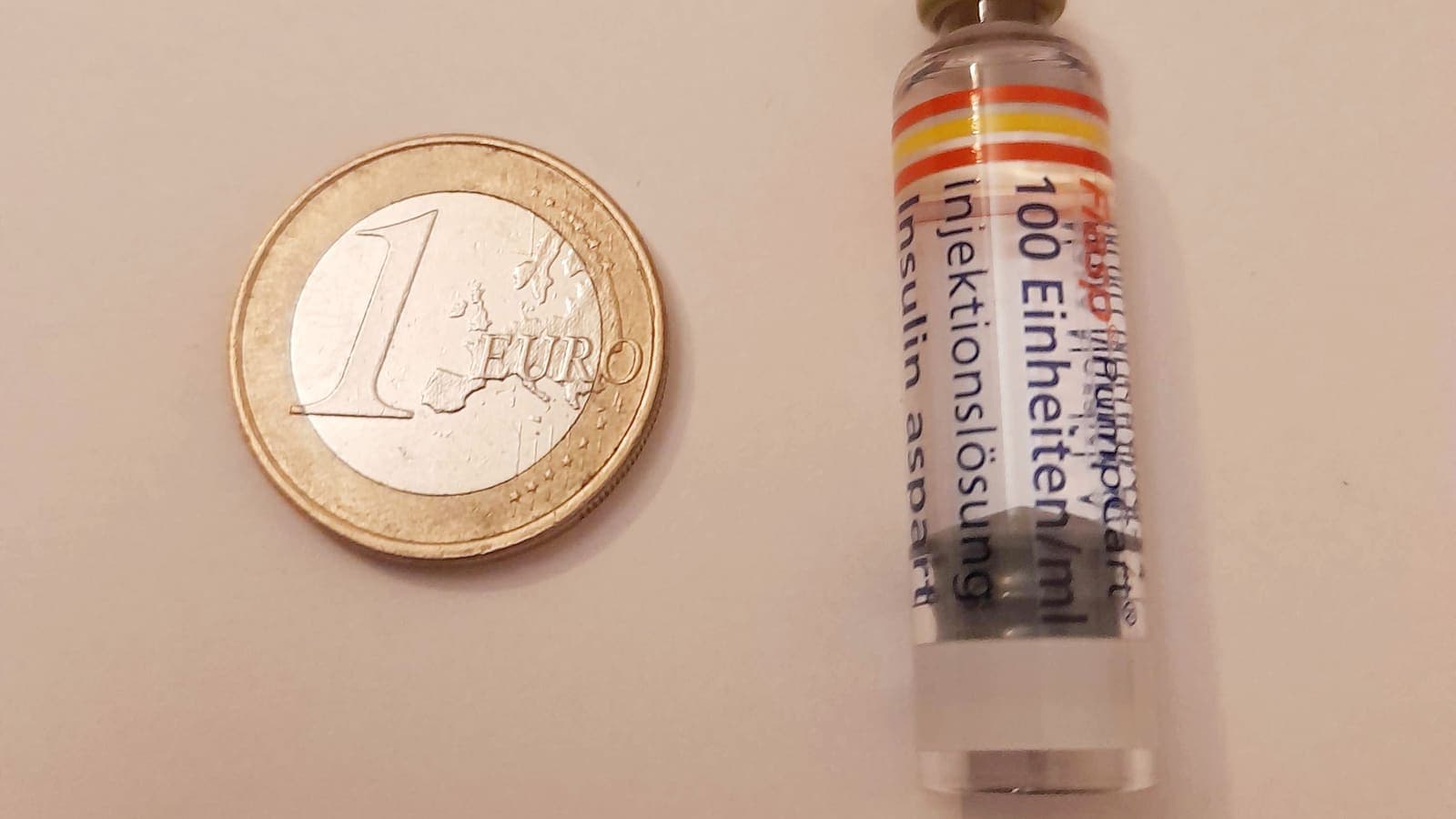
“It costs pennies to make” is the most repeated line in any argument about drug prices, and it is usually deployed without a number. There is a number, it comes from peer-reviewed work, and it is worth stating precisely — along with what it does and does not establish.
The insulin figure
A 2018 study in BMJ Global Health by Gotham, Barber and Hill modelled the cost of producing biosimilar insulin from the price of active pharmaceutical ingredient upward — ingredients, vials, transport, operating expenses, and the cost of bringing a biosimilar to market.
Per patient per year. Against US list prices that spent much of the last decade in the hundreds of dollars per vial.
Insulin is the cleanest case because the science is a century old, the patents on the original molecule expired long ago, and the production process is well understood and published. There is no meaningful argument that the price reflects the cost of discovering it. It was discovered in 1921 and the patent was sold for three dollars.
What the figure proves
That the marginal cost of a dose is not what sets its price. Once a manufacturing line exists, another vial costs single-digit dollars. Everything above that is fixed costs, research, failed programmes, distribution, margin and market power — in proportions nobody outside the company can see.
It also establishes a floor for what a competitive market would produce. Where competition arrives, prices fall toward that floor and stay there. That is not theory: it is what the US generic market does routinely, and it is why unbranded generics cost about a third less here than in comparable countries.
Cost-to-make is a weak argument on its own, and pretending otherwise damages the case rather than helping it. Almost every product is priced far above its marginal cost; software costs nothing to copy. The real question in pharmaceuticals is how to pay for the programmes that fail, which are most of them, and for the decade of work before a molecule reaches anybody.
Where that argument is weakest is exactly where insulin sits: a drug developed a century ago, with the development long since paid for, still priced as though it were novel. The strong version of the criticism is not “drugs cost pennies”. It is that the premium keeps being charged long after the thing it was meant to fund is finished.
What changed in January 2026
The Inflation Reduction Act of 2022 did something the US had never done: it let Medicare negotiate the price of selected drugs directly with manufacturers. Before that, statute expressly forbade it.
The first ten Part D drugs were selected, negotiated, and their prices took effect on 1 January 2026. CMS reports reductions of 38% to 79% against list, on drugs that had been costing Medicare about $50.5 billion a year. Fifteen more drugs follow for 2027, with the programme widening after that.
This is the first hard evidence in the US of what a single large buyer does to a single-seller market, and the direction is not ambiguous.
The limits are worth being plain about. It applies to Medicare, not to you if you are uninsured. It covers ten drugs, then twenty-five. And a negotiated Medicare price is not a cash price at a counter. If you are paying out of pocket, nothing about January 2026 changed what you were quoted.
What this leaves you with
The gap between what a drug costs to produce and what you are charged is real, large, and best understood as the cost of where you are buying rather than the cost of the medicine. The practical response is not to argue with it but to route around it: find the generic, find the cheaper pharmacy, find out whether it is on a shelf, and check manufacturer assistance before concluding you cannot afford it.
Every drug page here shows what pharmacies paid to acquire the drug next to every cash price we can find, so the gap is visible rather than argued about. Look yours up.